dilluns, 27 d’abril del 2015

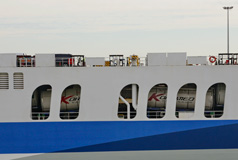
El Costa Magica arriba a Palamós amb 2.178 passatgers i marca una fita històrica*

El sector turístic és una peça clau per a la dinamització econòmica del conjunt del territori i l’activitat creuerística potencia els ports i les seves destinacions i contribueix a l’impuls del turisme. En aquest context, cada temporada hi ha noves navilieres que aposten per les instal·lacions portuàries de Palamós i Costa Cruceros és una companyia que s’ha estrenat avui amb el Costa Magica, un vaixell que farà tres escales al llarg de 2015.

Amb l’escala inaugural del Costa Magica Palamós ha rebut avui 2.178 passatgers, el major nombre de creueristes arribats fins avui en aquest port. A més, el Costa Magica té un arqueig brut de 102.587 tones i una eslora de 272 metres, característiques que el converteixen en el creuer més gran que ha visitat fins avui el port de Palamós.

L’estada d’aquest creuer s’estima que deixi un impacte econòmic de 115.000 euros al territori. Segons estudis del sector, cada passatger de creuer que visita un port escala es gasta una mitjana de 62 euros, calculant que desembarca un 75% del passatge. Les despeses d’aquests turistes de creuer inclouen excursions, restauració, compres, transports i prestacions de serveis al passatgers. També es calcula que en un port escala desembarca el 50% de la tripulació, amb una despesa mitjana de 21 euros per tripulant.

L’activitat creuerística del port de Palamós i la seva destinació turística es promou en els diferents fòrums del mercat de creuers a través de la marca Costa Brava Cruise Ports. Aquesta marca és el resultat de l’esforç conjunt que fa Ports de la Generalitat amb el Patronat de Turisme Costa Brava-Girona, l’Ajuntament de Palamós i la Cambra de comerç de Palamós. Aquest esforç institucional ha fet possible avui l’arribada de Costa Cruceros a Palamós.


Costa Magica portarà uns 7.000 passatgers

El Costa Magica és un vaixell de la companyia italiana Costa Cruceros que ha arribat avui per primer cop al port de Palamós amb 2.178 passatgers majoritàriament francesos, italians i suecs i un miler de tripulants. El vaixell ha arribat a las 07.00 h procedent de Gibraltar i preveu salpar a les 13.00 h cap al port francès de Marsella. Aquest creuer preveu fer tres escales a Palamós i es preveu que porti al voltant de 7.000 passatgers al llarg de la temporada.

El creuer té una eslora de 272 metres i un arqueig brut de 102.587 tones, dades que el fan el creuer més gran que ha visitat Palamós fins avui. A més, té una mànega de 35,5 metres i un calat de 8,3 metres.

El vaixell disposa de molts serveis a bord, quatre piscines, una de les quals és per a nens. Quatre restaurants, sis bars, dos salons, discoteca, sala de ball, teatre, casino, biblioteca, sales de reunions, una pista poliesportiva i un centre de salut i bellesa.

El vicepresident de Ports de la Generalitat, Pere Padrosa, acompanyat de diverses autoritats i representants institucionals ha lliurat al capità del Costa Magica la metopa commemorativa amb motiu de la seva primera escala al port de Palamós.

Costa Crociere té seu a Gènova (Itàlia) i aquí es promou amb la marca Costa Cruceros. De fet, Costa és l’operador europeu amb la flota més gran amb un total de 25 creuers, als qual se n'hi sumaran dos més l’any 2016. Costa Crociere forma part del grup Carnival Corporation, líder mundial del sector de creuers.

* Notícia publicada al web de la Generalitat. Celebrem aquesta notícia, no només per la vila de Palamós, sinó pel conjunt de Catalunya. Veient les dimensions de la nau (272 metres d'eslora i 8,3 de calat), algú es pregunta encara si els ports de Catalunya estan preparats per la nostra futura força naval? 


dilluns, 20 d’abril del 2015

Submarines With Wheels, Underwater Blimps, and a New Nuclear Arms Race*


Every two years, the super scientists at the US Navy's Office of Naval Research host a symposium. There, they talk about grant applications and small business partnerships — but they also discuss the bleeding-edge future of naval warfare.

Amid all the talk of lasers, railguns, and firefighting robots, Dr. Robert Ballard, the man whose accomplishments include finding the Titanic and discovering previously unknown lifeforms near seafloor geothermal vents, gave a talk. A talk in which he casually mentioned a mind-blowing new concept: "terrain-involved submarine warfare."

That means putting wheels on subs.

Generally speaking, submarines really, really hate interacting with the seafloor. In fact, they spend much of their time trying desperately to avoid it. Hitting a sharp rock could (Poseidon forbid!) tear a hole in the hull, and that's a pretty bad thing when the sea is putting a half ton of pressure on every single square inch of it. Subs generally don't have windows, so parking one on the sea floor — which has no shortage of sharp rocks — would be an adventure. Worse yet, subs don't exactly stop on a dime; they have incredible amounts of inertia. Parallel parking would be a nightmare.

Navy bigwigs and eggheads are well aware of these facts. And yet Ballard told an auditorium full of them that Navy subs should get up close and intimate with the seafloor. What made him do such a thing? Once upon a time, Ballard was in the employ of Army intelligence, analyzing maps to figure out if ridges, hills, valleys, and whatnot could, for instance, hide enemy tanks or mask troop movements. Ballard subsequently moved over to the Navy, and based on his Army experience, he started advocating for the embrace of undersea terrain rather than its avoidance.

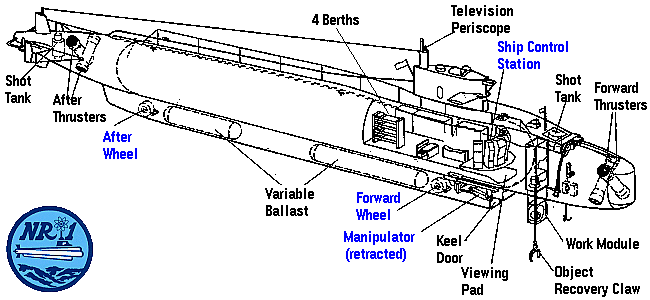
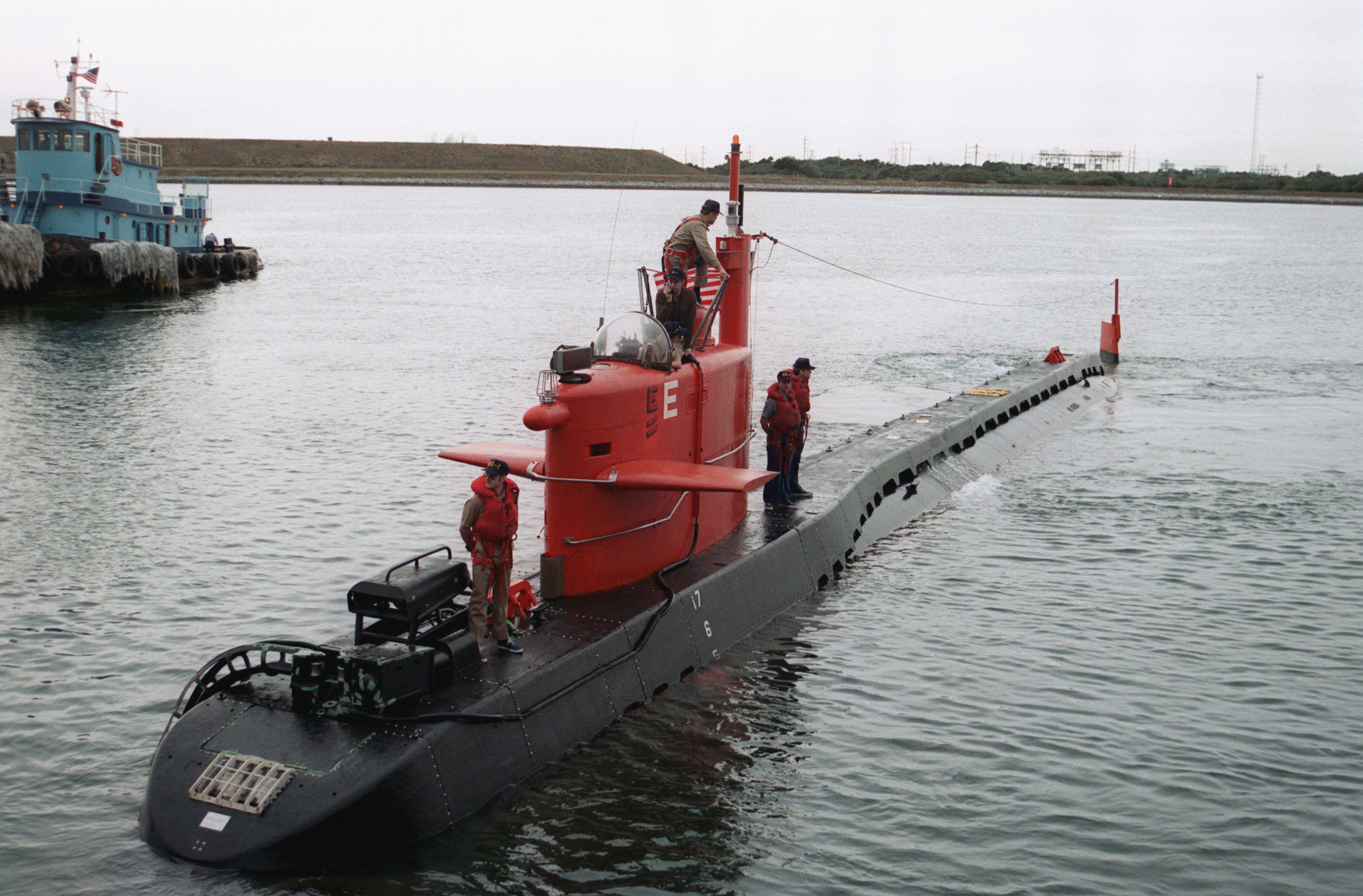
In 1984, Ballard demonstrated the ability to operate on the ocean floor during a two-week exploration near Iceland's Reykjanes Ridge. He took the Navy's deep-sea research submarine, the NR-1, down 3,000 feet and drove it around volcanic peaks; he even hid in the occasional lava tube. At the time, the NR-1 was the Navy's largest deep-sea research submarine and its smallest nuclear sub. At a length of 150 feet and 400 tons, it could support a crew of 13 for up to a month. But most importantly, the NR-1 had retractable wheels and portals. The wheels allowed the NR-1 to roll along the seafloor. The portals allowed the sub drivers to see where the hell they were going.

In addition to the fact that it's kind of badass to drive a submarine around on the ocean floor like a 400-ton, nuclear-powered tank, there are some definite advantages to rolling around in the mud. Submarines (and the surface ships they fight) rely on sonar to search for stuff. This can mean quietly listening for telltale sounds, like engine noises — that's called passive sonar. Or, like bats, subs can emit sound pulses, which bounce off objects, creating echoes that are received by the sub, a technique called active sonar. But in a complex, jumbled terrain with rocks, mountains, and canyons, the sound waves get so jumbled up that it's impossible to make any sense of the sounds that come back.

Navies also use very sensitive magnetic detectors to locate the giant, metallic mass of the submarine as it moves underwater. But this method is less effective in some kinds of seafloor terrain. For example, near basaltic rocks, which interfere with even simple compasses and create downright havoc with sensitive magnetic sub-hunting gear.

Between the jumbled sonar and the magnetic interference of the ocean floor, it can be very hard to find something hiding in the seafloor terrain. Ballard illustrated this point clearly when he dared the Navy to find him while he was tooling around on the Reykjanes Ridge in the NR-1. Two weeks of searching later, the Navy had no clue where he was.

The Navy lost interest in Ballard's display when the Cold War ended, but there are plenty of reasons why it deserves to be revisited. For decades, subs have relied on stealth to protect them. But as a report by the Center for Strategic and Budgetary Analysis notes, the old rules for subs may be changing. For starters, each incremental improvement in the technology that makes subs stealthier is getting exponentially more expensive, narrowing the performance gap between different submarines. In addition, there are a lot of sub-hunting techniques that circumvent traditional submarine stealth. Until now, those techniques required too much computational power to be practical. Soon, advances in computers may make these more exotic sensors a viable option.

That said, there's still one thing to keep in mind about Ballard's idea: how truly goddamn weird it is.

What he's proposing is a whole new war-fighting domain. Domain is wonkspeak for an environment in which fighting occurs, and up until 1,000 BCE or so, humanity fought in one domain: land. In the three millennia since, warfare has expanded into six — land, sea, undersea, air, space, and now cyberspace. For all practical purposes, the undersea domain today extends down a couple thousand feet or so (or to somewhere just above the seafloor if it's shallow enough). If you go deeper than that, it's aqua incognita for most subs; hulls collapse, death ensues, and nobody's happy.

But if you consider the undersea domain from the seafloor looking up rather than from the surface looking down, things start to change. Traditional submarines don't look like stealthy predators running invisible below the ocean waves — they look like big, fat, stupid blimps clumsily floating in the water above. New terrain-involved submarines become aquatic helicopters, landing and taking off from the seafloor. The most advanced seafloor mines, like the US Navy's CAPTOR — it's basically a torpedo that hides and listens for passing ships — become the seafloor equivalent of surface-to-air missile sites. Complex seafloor terrain is no longer a navigational hazard; it's a source of cover and concealment.

So really, this isn't about subs on wheels — it's about treating the ocean like the sky. And by doing that, everything anyone ever thought they knew about fighting in the sea and undersea domains is up for review.

None of this will happen anytime soon; current submarines don't go deep enough to interact with much of the sea floor. Smaller deep-submergence vessels capable of going several thousand feet down are slow, require a mothership, and generally can only operate for a few days at a time. But that will change; an explosion in ultra-deep sea oil drilling and the emerging field of seabed mining will continue to drive advances in Remotely Operated Vehicles (ROVs) and Autonomous Underwater Vehicles (AUVs). Terrain-involved submarines will be a reality.

And here's why all of this is truly creepy: Anything that makes subs easier to find and kill threatens nuclear missile subs. Nuclear ballistic missile submarines are considered the nuclear deterrent of last resort because they've historically been the most reliable and best protected part of the nuclear arsenal. Even if an attacker can hit every single square inch of a country in a surprise nuclear attack, the attacker would still be vulnerable to a devastating counterattack launched by nuclear subs hiding at sea. Because of this, the majority of the US nuclear arsenal is submarine-based. A guaranteed ability to counterattack goes a long way in preventing enemies from getting an itchy nuclear trigger finger.

But seafloor warfare could change that. Nations all around the world — including the US, Russia, and China — are signatories to the Seabed Arms Control Treaty that bans placing nukes on the seafloor (at least outside of the coastal zone that extends 12 miles from a country's shores). If a nation withdrew from the treaty to build a nuclear missile base on the seabed because it no longer felt its nuclear missile subs were secure, it could spark an arms race. Thus, seafloor warfare can threaten the stability of the nuclear deterrent. And if the idea of wheels on subs occurred to Ballard, it's no doubt occurred to other bright folks elsewhere in the world.

The thing about treaties is that they're not forever. Eventually, someone decides to quit or cheat, or technology advances so much that the treaty becomes a historical relic. The US withdrew from the Anti-Ballistic Missile Treaty in 2001 to pursue its missile defense program. In early March, Russia completed its de facto withdrawal from the Treaty on Conventional Armed Forces in Europe, which limits the size of armies deployed to Europe. So there's no reason to believe the existing treaty on WMD on the ocean floor will last forever. So Ballard's mind-blowing concept of today could be a real headache of tomorrow.

Follow Ryan Faith on Twitter: @Operation_Ryan

*Article publicat a Vice News. Interessantíssima informació per totes aquelles persones interessades en les operacions submarines. Certament, el contacte amb el fons sempre ha estat una espasa de doble fulla: una amenaça seriosa per la integritat del casc, però un mantell difuminador davant possibles caçadors. Per pensar-hi.


dimarts, 14 d’abril del 2015

El tràfic de contenidors registra un increment del 2% fins al mes de febrer i el de SSS creix un 14%*

El tràfic de contenidors del Port de Barcelona fins al febrer ha acumulat un total de 285.808 TEU (un TEU equival a un contenidor de 20 peus), un 2% més que en els dos primers mesos de l’any 2014. L’evolució ha estat més positiva si es considera només el tràfic de comerç exterior, ja que el nombre de contenidors plens d’importació ha ascendit a 78.009 TEU, un 12% més que en el mateix període de l’any anterior, i els contenidors plens d’exportació han totalitzat 84.873 TEU (+3%).

D’altra banda, fins al mes de febrer les terminals especialitzades en tràfic de vehicles han gestionat un total de 118.824 vehicles nous, un 12% més que en el període gener-febrer de 2014, amb 66.741 unitats d’exportació (+5%) i 23.545 d’importació (+73%).

En conjunt, el tràfic total ha sumat 6,5 milions de tones manipulades, un 6% menys que l’acumulat el febrer de l’any anterior. Mentre que la càrrega general s’ha mantingut (4 milions de tones), en el descens global del tràfic han incidit la caiguda del 13% en els líquids a granel, que se situen en 1,8 milions de tones, i del 20% en els sòlids a granel, que han totalitzat 597.197 tones. En qualsevol cas, s’entén que les davallades i el comportament d’alguns tràfics es deuen a causes conjunturals i ocasionals, amb impacte en el curt termini, i les previsions dels operadors apunten que en el conjunt de l’any els volums gestionats es recuperaran.

Ha seguit a un bon ritme de creixement la mercaderia transportada per les autopistes del mar (línies que connecten la capital catalana amb diverses destinacions d’Itàlia i del nord d’Àfrica) i en els dos primers mesos de l’any s’han gestionat un total de 20.147 UTI (una unitat de càrrega rodada que equival a un camió, plataforma, remolc, etc.), un 14% més que en el període anterior. Aquest increment del volum de tràfic ha estat afavorit pel fet que algunes de les línies existents s’han reforçat amb més vaixells, és a dir, que han augmentat les freqüències d'alguns serveis.

Pel que fa al tràfic ferroviari, durant els mesos de gener i febrer d’enguany 23.000 TEU (+13,5%) i 35.152 vehicles nous (+5%) van entrar o sortir del Port en aquest mode de transport.

Per altra part, des de principis d’any han passat pel Port un total de 219.887 passatgers, un 2% menys que els mesos de gener i febrer de 2014. D’aquests, un total de 73.029 han estat usuaris dels ferris de línia regular (amb destinació a les Illes Balears, Itàlia i Àfrica del Nord), un 1,4% més que el 2014, mentre que s’han registrat 146.858 creueristes (-3%).

* Notícia publicada al web del Port de Barcelona. Compartim aquesta notícia per mantenir-vos al dia de l'activitat del Port de Barcelona.


The Rapid Expansion of China’s Navy in Five Charts*

With tensions mounting over China’s island-building in the South China Sea, the U.S. Office of Naval Intelligence has published its first report on the Chinese navy since 2009. The report, released late Thursday (pdf) predicts: “In the next decade, China will complete its transition from a coastal navy to a navy capable of multiple missions around the world.”

The report says that in 2014, China reclaimed hundreds of acres of land at the seven features it occupies in the disputed Spratly Islands and “appears to be building much larger facilities that could eventually support both maritime law enforcement and naval operations.” It also confirms that China’s newest destroyers have been fitted with a new kind of vertically launched supersonic anti-ship cruise missile, called the YJ-18, which could significantly enhance their capacity to threaten U.S. ships.

Here are five graphics that illustrate some its other key findings:

1) China’s coast guard and maritime law enforcement fleet is now bigger than those of Japan, Vietnam, Indonesia, Malaysia and the Philippines combined. The coast guard will add 50 ships to its fleet between 2012 and 2015, increasing its overall force by 25 percent.

2) China launched more naval ships than any other country in 2013 and 2014, and is expected to continue this trend through 2015-16.

3) The range of Chinese naval surface-to-air and anti-ship cruise missiles is increasing. China’s newest class of destroyer, the LUYANG III, is fitted with the new YJ-18 anti-ship cruise missile which Andrew Erickson of the U.S. Naval War College says in a blog post “could pose unprecedented challenges to the air defenses of U.S. and allied ships.”

4) China’s submarine force currently consists of five nuclear attack submarines, four nuclear ballistic missile submarines and 57 diesel attack submarines. By 2020, that force will likely grow to more than 70 submarines.

5) According to the report, China’s navy will soon assume a central role in the country’s nuclear deterrence, launching ballistic missile submarine patrols with intercontinental-range missiles. “As we look ahead to the coming decade, the introduction of aircraft carriers, ballistic missile submarines, and potentially a large-deck amphibious ship will fundamentally alter how the PLA(N) operates and is viewed by the world,”it says.
– Jeremy Page. Follow him on Twitter @JNBPage

* Notícia publicada al Wall Street Journal. Clar i concís resum de punts clau en l'expansió navla xinesa, que publiva l'ONI cada any. Per aquells qui vulguin accedir al document complet, cliqueu aquí.