Es mostren els missatges amb l'etiqueta de comentaris Brasil. Mostrar tots els missatges

dimecres, 12 de febrer del 2014

New shore integration facility launched for Brazil’s submarine combat systems*

DCNS has successfully launched a new shore-based integration facility for the Brazilian Navy's next-generation conventional-propulsion submarines combat system at the French defence procurement agency's Saint-Mandrier-sur-Mer centre near Toulon.
Developed in cooperation between DCNS and the Brazilian Navy under a technology transfer agreement spanning submarine design, development and construction, the new facility will be used to test the submarines' sophisticated data processing systems prior to installation while providing significant time savings.
The combat system of the first Scorpene submarine of the Brazilian Navy will be integrated and interfaced with the shore integration facility in a technical configuration.
DCNS/Brazilian Navy teams will test combat systems for Brazil's Scorpene submarines, as well as train Brazilian officers and crew in accordance with the technology transfer agreement over the next two years.
"The Scorpene submarines will protect and defend Brazil's 8,500km coastline."
Following completion of testing, the components will be transferred for integration onto the submarines at the Itaguaí shipyard near Rio de Janeiro, Brazil.
Brazil placed an order in December 2008, for the construction of four diesel-electric-powered submarines based on the Scorpene to joint venture company set up by DCNS and Odebrecht of Brazil.
Scheduled to enter service in 2017, the Scorpene submarines will protect and defend Brazil's 8,500km coastline, while meeting the detailed specifications of the Brazilian Navy.
The versatile vessels can conduct a full range of missions including anti-surface and anti-submarine warfare, special operations and intelligence gathering.

* Notícia publicada a Naval Technology. L'construcció de moderns espais d'allotjament de submarins, amb assessorament francés, demostra que la política de defensa brasilera no és en absolut arbitrària, sinó meditada i pensant totes les necessitats que implica una força realment operativa.

dilluns, 24 de juny del 2013

Brazilian Navy receives final Amazonas-class OPV from BAE*

The Brazilian Navy has received the third and final Amazonas-class ocean patrol vessels (OPV), named Araguari (P122), from BAE Systems at Portsmouth Naval Base, UK, to boost its maritime capabilities.
The OPV has been delivered as a part of the Brazilian Navy's $186m deal with BAE to procure three 90m, 2,200t OPVs, originally built for the Trinidad and Tobago coastguard to perform intercepting and emergency relief operations in the Caribbean region.
The deal also includes an additional £13m for training and support by BAE with an option to locally build another five OPVs to support naval re-equipment programme for the Brazilian Navy.
Brazilian Navy naval engineering director rear admiral Francisco Deiana said: "The three Amazonas-class units make up an important contribution to both our ability to provide security, safety and protection to the Brazil's jurisdictional waters and to deliver our commitments to the Brazilian Maritime Authority."
Capable of carrying a crew of 80, with additional accommodation for 40 troops or passengers, the vessel features a helicopter flight deck to support medium-sized helicopter operations, 30mm cannon, 25mm guns and can cruise at a speed of 25k when fully loaded.
Amazonas, the first OPV of the class, was delivered to the navy in June 2012, while the second ship, Apa, was handed over in November 2012.
The ships are fitted with two rigid inflatable boats and will be used by the navy to conduct maritime security in its territorial waters.

* Notícia publicada a Naval Technology. Ja haviem parlat anteriorment d'aquest procés, i avui en tenim una fita important.

dimecres, 10 d’abril del 2013

Brazilian Navy's third Amazonas-class OPV sails for sea trials*

The Brazilian Navy's third and final BAE Systems-built Amazonas-class ocean patrol vessel (OPV), Araguari (P122), has sailed from Portsmouth to undergo an extensive sea trials programme off the UK coast.
During the two-week maiden sea trials, the ship will validate all of its integrated element's functionalities including its propulsion and combat systems.
BAE Systems Maritime commercial director Nigel Stewart said: "The BAE Systems team will test Araguari's performance and work with her crew to ensure they are ready for the challenges that the ship will face when delivered to Brazil to provide maritime security, humanitarian relief and search-and-rescue."
In 2011, the Brazilian Navy placed orders with BAE to deliver three OPVs and ancillary support services, including a manufacturing licence for further vessels of the same class that will be constructed in Brazil.
Based on the UK Royal Navy's River-class OPVs design, the 90m-long Amazonas-class ships will be used by the navy to conduct maritime security in its territorial waters, including protection of the country's oil and gas reserves.
Capable of carrying a crew of 80, with additional accommodation for 40 troops or passengers, the vessel features a 30mm cannon, two 25mm guns, two rigid inflatable boats as well as a helicopter flight deck capable of landing a medium-sized helicopter.
Expected to be delivered to the Brazilian Navy in June 2013, Araguari ship's crew of 81 has already started training to handle the OPV at HM Naval Base Portsmouth, UK.

* Notícia publicada a Naval texhnology. Comprtim aquesta notícia com a complenent de les anteriors referents al Brasil.

dijous, 4 d’abril del 2013

Brazil Opens Sub Shipyard, Plans Fleet Update*

LONDON — Brazil’s ambition to build a modern Navy with regional and sometimes global reach took a big step forward in February, when President Dilma Rousseff inaugurated a submarine-building facility that could eventually construct a fleet of nuclear-powered boats.
Rousseff’s presence at the Itaguai facility at the Brazilian Navy’s base on Sepetiba Bay near Rio de Janeiro was the culmination of a near three-year building program undertaken by local company Odebrecht and its joint venture partner, France-based DCNS, to provide the industrial capability to deliver four of the French company’s conventionally powered Scorpene submarines.
The potential for new naval business in Brazil, and elsewhere in Latin America, lies behind the attendance of a large number of maritime companies at the upcoming LAAD Defense and Security show due to kick off in Rio on April 9.
Companies from Britain, China, France, Germany, the Netherlands, Spain, the U.S. and elsewhere are among the list of international naval suppliers with a presence at the show.
All of them will be looking for signs as to whether Brazil’s slowing economy and high spending requirements to fund upcoming international sporting events such as the World Cup and the Olympics will affect the scope and timing of naval update plans.
The Brazilian Navy already operates submarines, but the new unit at Sepetiba Bay is the first time local industry has had a facility to build its own boats. Besides being home to a submarine construction yard, plans call for the Sepetiba Bay facility to house a submarine base able to accommodate and support up to 10 vessels.
Aside from the four diesel-electric boats, the submarine deal agreed to by the French and Brazilian governments in 2008 includes DCNS assistance in the design and production of a nuclear-powered submarine — although the Brazilians alone would be responsible for the reactor.
DCNS is building the forward section of the first Scorpene submarine at its Cherbourg plant in northern France and shipping it over to Itaguai, a company spokeswoman said.
The remainder of the program will be undertaken in country as part of Brazilian moves to build local industrial capabilities across the defense sector.
The first of four submarines in the PROSUB program is due for delivery in 2017, the second in 2018, third in 2020 and fourth in 2021, she said.
The first nuclear-powered submarine is due in 2025, adding Brazil’s name to an exclusive club with the capability: Britain, China, France, India, Russia and the U.S.
Some European executives, though, are concerned whether Brazil, even with non-nuclear assistance from an experienced submarine builder such as DCNS, can meet the in-service target date for the nuclear-propelled attack craft.
Worse than that, they say, the program could divert funds from other weapons programs if it is hit by serious budget overruns.
Beefing up their submarine capabilities isn’t the only naval update the Brazilians are eyeing.
Offshore patrol vessels (OPVs), frigates, an aircraft carrier, inshore patrol craft and eventually logistics support vessels will all likely figure in an update of a surface fleet, which will look pretty tired by 2017, executives said.
Last month saw the surface fleet expand with the handover of the second of three offshore patrol boats acquired from British shipbuilder BAE Systems.
A contract with a local shipbuilder for a batch of inshore patrol craft could be awarded in the next few weeks, executives said.
They add that the award could be followed this year by a consulting deal between Brazil and an overseas yard in what is likely to be the first step toward designing an aircraft carrier to replace the Sao Paulo, the ex-French carrier Clemenceau, by the middle of the next decade.
BAE, Fincantieri, Navantia and others are vying to secure what would be a key deal ahead of Brazil moving toward design and construction.
The Brazilians have begun updating other parts of the surface fleet with the 133 million pound ($201 million) purchase of three OPVs from BAE in January 2012.
The agreement also includes a manufacturing license to allow for a further batch of vessels to be built locally — although there is no guarantee the Brazilians won’t look elsewhere to build up OPV numbers.
The Brazilians have been talking to the British and other contenders about their frigate requirements, and have had engineers embedded for several months in the BAE-led team designing the Type 26 Global Combat Ship for the Royal Navy.

* Notícia publicada al Defense News. El salt del Brasil cap a ser un actor internacional creïble avança a pas ferm. Potser no li cal disposar de submarins nuclears, però disposar d'instal.lacions per producció, manteniment i allotjament d'aquestes naus no és quelcom menor. Un tema a seguir.

dimecres, 4 de juliol del 2012

Brazilian Navy receives first OPV from BAE*


The Brazilian Navy has taken delivery of the first of three ocean patrol vessels (OPVs) from BAE Systems at Portsmouth Naval Base, US, in support of navy's Prosuper fleet modernisation programme.

Delivery is part of the Brazilian Navy's $186m deal with BAE for the purchase of three OPVs, originally built by BAE for the Trinidad and Tobago coast guard to perform intercepting and emergency relief operations in the Caribbean region.

In addition to providing three already-built 90m-long, 2,200t OPVs, the deal includes an additional £13m for training and support by BAE with an option to locally build another five OPVs to the Brazilian Navy.

BAE Systems's naval ships business managing director Mick Ord said: "The handover of the first ship marks both a significant stage in the programme and the close working relationship we are forming with Brazil.

"I am sure these highly capable vessels will be a great asset to the Brazilian Navy."
 
Capable of carrying a crew of 70, with additional accommodation for 50 troops or passengers, the vessel features a helicopter flight deck, 30mm and 25mm cannons and can cruise at a speed of 25k when fully loaded.

The deal was originally signed in 2007 for the construction of three OPVs and supported by the UK Government, but was cancelled in September 2010 over delays relating to delivery timelines.

The second and third vessels are scheduled for delivery to the Brazilian Navy in December 2012 and 2013 respectively.

The Brazilian Navy fleet modernisation programme also involves acquisition of five frigate-class boats and one support ship.

* Notícia publicada a Naval Technology. La renovació de l'Armada brasilera, amb l'aposta per patrulleres polivalents, sembla avançar per una perspectiva realista de les pròpies necessitats.

dimecres, 4 de gener del 2012

Brazil Buying & Building BAE’s 90m Patrol Vessels*

OPV trials
Scarborough, Trials
 
As 2011 came to a close, Brazil’s buy of 3 in-stock Offshore Patrol Vessels from BAE, with an option to license-build 5 more, has the potential to cast wide ripples.

Brazil has very extensive coastal responsibilities, a sizable Marine Corps, and a Navy whose frigates are either British designs, or former British ships. That navy is expanding, as Brazil moves to protect key assets like its deep-water oil production, but British shipbuilders will face stiff competition. Other key Brazilian suppliers like France’s DCNS will be bidding, alongside naval shipbuilders around the world. The OPV purchase is certainly another piece of the naval puzzle for Brazil, alongside its future submarines. Is it also another piece of the puzzle for BAE?

The Ships

OPV trials
Port of Spain, trials
(click to view full)

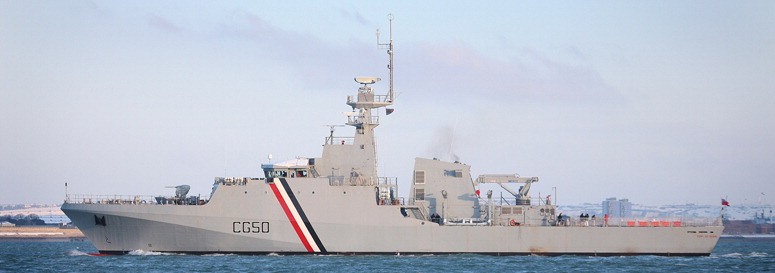
The Port of Spain Class is an enlarged offshoot of the River Class OPVs built for Britain’s Royal Navy. A similar design was sold to the Thai Navy, and is being built by Bangkok Dock.
The first of the ships was built at BAE Systems’ Portsmouth facility on the English Channel, while the 2nd and 3rd vessels were built at the yard at Scotstoun on the Clyde River, in Scotland. Key statistics include:
Length overall: 90.5m
Breadth moulded: 13.5m
Draught: 3.5m
Displacement: 1,800t/ 2,200t fully loaded – corvete sized
Propulsion: 2×7,350 kW diesels, driving 2×3.1 m Wartsalia propellers
Speed: 25+ knots
Range at 12 knots: 5,500+ nm
Endurance: 35 days
Nominal crew: 60. Can operate with 36, accommodate up to 70.
Deck capacity: 1 helicopter up to 7t; 6×20 foot ISO containers
Other features include:
  • Terma Scanter 4100 X-band radar
  • Ultra Electronics OSIRIS combat & surveillance system
  • 30mm remotely-operated weapons station up front, and 2×25mm cannons port and starboard.
  • Modern communications, command and control system system
  • Ability to conduct sea boardings using onboard RIB and Fast Interceptor Craft
  • Accommodation for 50 fully equipped troops
  • Ability to conduct helicopter operations
  • Ample deck space for the transport of containers and additional craft
  • 16t capacity crane on board, with 14m reach
  • Ability to replenish at sea
The 90m Offshore Patrol Vessels were originally part of a GBP 150 million Vosper Thornycroft Group contract with Trinidad & Tobago, and were scheduled for delivery in mid-2009. BAE eventually acquired VT Group’s shipbuilding, and the first 2 ships would have been delivered in October 2010, but the customer canceled the contract. They were docked at BAE facilities, awaiting a buyer as BAE pursued negotiated and legal options with Trinidad & Tobago, and explored international re-sale.
That eventually materialized at the end of 2011, with a sale of all 3 ships to Brazil, plus license-build options for up to 5 more ships in a manner similar to the Thai deal.
Trinidad & Tobago’s own territorial waters didn’t require all of these capabilities, but long-reaching drug interdiction patrols within the Caribbean did. Brazil will be using the boats for a different purpose, but the vessels’ endurance and seakeeping will come in very handy when patrolling the deep-water zones around its key offshore oil sites.

Contracts & Key Events

T&T Negotiations
(click for video)
Jan 2/12: BAE officially announces a GBP 133 million (currently $206 million) sale of the 3 Port of Spain Class OPVs to Brazil, along with and ancillary support services and the rights to license-build additional ships of class. The exact number is not mentioned clearly, despite earlier reports of 5 ships. Brazilian Navy Director of Naval Engineering, Rear Admiral Francisco Deiana, did add that:
“This procurement does not change the scope of our PROSUPER programme for the acquisition of future ships which also includes a further five Ocean Patrol Vessels of c.1,800 tonnes to be constructed in Brazil.”
Port of Spain and Scarborough are expected to be delivered with little delay, while San Fernando will reportedly need to be fitted out with the rest of her equipment before she can be delivered. BAE Systems Maritime Managing Director, Andrew Davies, expressed his hope that “this will be the start of a long term partnership with Brazil in the maritime sector.” BAE would certainly like customer satisfaction at the accelerated delivery, and close cooperation in building more OPVs, to translate into a edge for their Type 26 frigates, as Brazil moves to re-equip its surface fleet (vid. Sept 14/10 entry). See also the BBC report’s analysis, which is interesting:
“For naval shipbuilding in Britain (and that’s almost all there is left), it carries a sombre warning – that the skills being sought by BAE Systems’ customers are not in construction but in design…. The intention is to make the design adaptable to different requirements and different budgets for weapons systems, in contrast with past Royal Navy designs…. If successful, it means orders for BAE Systems, and jobs for designers and project managers, but it doesn’t look so good for shipyard workers on the Clyde or Portsmouth.”
Read: BAE Systems | BBC | Defense News | Poder Naval [in Portuguese]
Dec 11/11: According to the Brazilian newspaper ALIDE, Brazil’s navy may be about to buy the Port of Spain Class, plus the option to build another 5 under license. Technical aspects have reportedly been settled, leaving political-industrial issues such as industrial offsets and financing. Navy Recognition.
Aug 3/11: BAE Systems moves the 3 ships to Portsmouth, and is attempting to persuade the government of Trinidad & Tobago to allow resale, instead of facing the International Court of Arbitration.
The Sultan of Brunei lost a similar 2006 ICA case to BAE, involving the 95m Nakhoda Ragam Class corvettes. The Sultan had to pay BAE, and ended up selling the corvettes to Algeria at a loss, before replacing the corvettes with another order from Germany’s Lurssen Werft: 3 smaller Darussalam Class OPVs. CNC3 TV [video]
Sept 22/10: Trinidad & Tobago cancels the contract for the Port of Spain class. BAE dsays they will attempt to negotiate a settlement. If that fails, international arbitration is likely. UK’s Telegraph.
Sept 14/10: The UK and Brazilian Governments sign a Defence Cooperation Agreement, with BAE touting its Type 26 future frigates as part of a larger co-operation package that would equip Brazil’s navy. The Port of Spain Class is part of that mix:
“In the near term, BAE Systems believes that its 90 metre Ocean Patrol Vessel will prove an attractive option to the Brazilian Navy. With full blue water capability, it can undertake surveillance and deterrence of oil and gas installations in Brazil’s territorial waters as well as more general maritime security and search and rescue operations. The design is based on the proven River Class vessels in use with the UK Royal Navy and uses the same core platform as the vessels BAE Systems has built for the Trinidad & Tobago Coast Guard, with systems and equipment tailored to the Brazilian Navy’s requirements. The company already has a similar technology transfer agreement in place with Bangkok Dock in Thailand, which is building one vessel of this class for the Royal Thai Navy.”
Sept 7/10: Scarborough, the 2nd of 3 Port of Spain Class OPVs for the T&T Coast Guard, has successfully completed sea trials off the west coast of Scotland, and is on track to be delivered in October 2010. BAE Systems.
July 16/10: The 3rd Port of Spain Class OPV, San Fernando, is launched at 0400, due to the early high tides on the Clyde River in the summer months. BAE Systems.
Nov 18-19/09: The 1st OPV is formally named Port of Spain, then the 2nd ship is launched and named Scarborough, at the BVT Surface Fleet facility on the Clyde river, in Scotland. Port of Spain is Trinidad’s capital. Scarborough is Tobago’s capital.
The two 90m Offshore Patrol Vessels for the Trinidad and Tobago Coast Guard are part of a £150 million contract to build, integrate, test and commission (up to sea trials) three ships for the Government of the Republic of Trinidad and Tobago. Under the program, BAE is also providing training and a 5-year in-service support package, while the UK Ministry of Defence is providing advice to the Government of the Republic of Trinidad and Tobago, and operational sea training to the Trinidad and Tobago Coast Guard crews. BAE Systems.
October 29/09: BAE buys VT’s shipbuilding business, but the purchase agreement’s value is reduced a bit because of ongoing issues and delays involving the Port of Spain Class.
June 28/07: Ultra Electronics announces that the Port of Spain Class will use its OSIRIS combat system.
“Ultra’s OSIRIS system integrates the surface and air surveillance radars together with an advanced electro-optical surveillance capability in order to enhance the crew’s situational awareness. The OSIRIS system also provides the vessel’s command and control and gun fire control capability [noted as a 30mm gun and 2×25mm guns).
Ultra has worked closely with VT over several years to develop jointly a version of OSIRIS optimised for the Trinidad and Tobago vessels. The system will be integrated and delivered by Ultra’s Command & Control Systems business in partnership with radar specialist Terma A/S of Denmark and Ultra’s SML Technologies business.”
April 2007: VT Shipbuilding signs a deal with Trinidad & Tobago to build, integrate, test and commission up to sea trials, 3 of their 90-meter Offshore Patrol Vessels for the Republic of Trinidad and Tobago’s Coast Guard.
The program includes training and a 5 year in-service support package, while the UK Ministry of Defence is providing advice to the Government of the Republic of Trinidad and Tobago, and operational sea training to the Trinidad and Tobago Coast Guard crews. The Port of Spain Class are scheduled for delivery in mid-2009.

Additional Readings

* Us pengem aquesta notícia del Defense Industry Daily per complementar l'anterior.

Britain will supply the Brazilian navy with three patrol vessels*


The ocean patrol vessels are already built, having been ordered by the government of Trinidad and Tobago in a contract which was terminated in 2010. Two of the boats were constructed on the Clyde and the other at Portsmouth.

The new agreement with Brazil will allow vessels of the same class to be made under licence there. It came 16 months after the Caribbean deal went sour. It is still in arbitration.

The purchase price agreed with the Brazilian Navy is £17m less than the original contract was worth, but BAE Systems said the price was a good one with which the defence giant was “comfortable”.

The contract is also significant for agreeing to licence the design for building another five of the 90m vessels in Brazil, each weighing 2,200 tons and capable of 25 knots.

Brazil is at the start of a major naval renewal program. With a fast-expanding offshore oil and gas industry, the capability of the 90m ships is seen as important to protecting the country's economic security.

The Brasilia government is also interested in building frigates, and it has been invited by BAE Systems to be a partner in developing the next generation of its warships.

The Ocean Patrol Vessels were originally ordered from Vosper Thorneycroft in 2007, but the company was running late with construction at the time its shipbuilding arm merged with BAE Systems in 2008.

The deal with Trinidad and Tobago was supported with aid from the UK government, as the ships were seen as helpful to intercepting Caribbean drug-runners and in emergency relief operations in the area.

However, the cancellation of the order in September 2010 meant the ships have been berthed at Portsmouth awaiting a sale to another buyer. Two of them will be delivered to the Brazilian Navy this year and the third is to be fitted out for delivery in 2013.

Andrew Davies, managing director of BAE Systems Maritime division, said: “This is a significant step forward in our relationship with Brazil. The Ocean Patrol Vessels are highly capable ships and I am sure they will be a tremendous asset to the Brazilian Navy.

”We are looking forward to working together and hope this will be the start of a long-term partnership with Brazil in the maritime sector.“

Rear Admiral Francisco Deiana, the Brazilian Navy's director of naval engineering, said: ”The acquisition will make an important contribution to our ability to provide security and protection to Brazil's jurisdictional waters”. (BBC).-

* Notícia publicada a MercoPress. El creixement del Brasil, entre d'altres coses, es sustenta en la fonamentació del poder de l'estat, i aquest passa pel control de les aigües territorials davant de contrabandistes i narcotraficants. Celebrem l'acord assolit amb el Regne Unit.