dimecres, 30 de maig del 2012

Russia Floats Out New Corvette*


St. Petersburg's Severnaya Verf shipyard floated out a new stealth corvette for the Russian Navy at an official ceremony on Wednesday.

The Stoyky is the fourth Project 20380 or Steregushchy class corvette designed by the Almaz Central Marine Design Bureau. The ship is expected to join Russia’s Baltic Fleet in November 2013 after a series of sea trials.

The first Project 20380 corvette, the Steregushchy, was put into service with the Baltic Fleet in October 2008 and the second, the Soobrazitelny, joined the Russian Navy in October 2011.
The third ship of the same series, the Boyky, is undergoing sea trials to be commissioned in November 2012.

The Steregushchy class corvette is capable of engaging enemy surface ships, submarines and aircraft, and providing naval gunfire support for beach landings. Advanced stealth technology is used to reduce the ship's radar, acoustic, infrared, magnetic and visual signatures.

Russia plans to have up to 30 vessels of this class to ensure the protection of its coastal waters, as well as its oil and gas transportation routes, especially in the Black and the Baltic seas.

Each corvette has a displacement of 2,000 metric tons, maximum speed of 27 knots, and a crew of 100.
The ship's armament includes Kh-35 (SS-N-25 Switchblade) anti-ship cruise missiles, a 100-mm gun, a variety of air-defense and anti-submarine systems, and a Ka-27 Helix ASW helicopter.

* Notícia publicada a RIA Novosti. Com hem anat comentant en aquest bloc, la renovació de l'Armada russa és un fet en curs. En aquest cas les corbetes Steregushchy, són unes interessants mostra de polivalència, encara que estiguin pensades per operacions litorals.

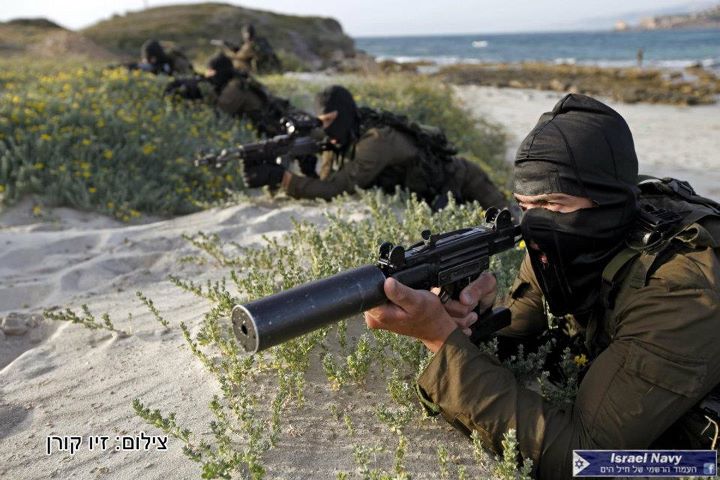
Israeli Navy trains marine forces for fourth Dolphin-class submarine*


The Israeli Navy's combat scuba divers and marine commando forces are currently undergoing training before receiving the fourth Dolphin-class submarine, which is currently being tested.

The German-built submarine was officially handed over following the acquisition and development process led by the Israeli Ministry of Defence and the navy, according to a well-placed source.

Initially, 10% more scuba divers will be trained and the new soldiers will join the ranks of the Israeli Navy train naval commando unit, Shayetet 13, for the fourth submarine, following the completion of submarine tests.

Israel's Defence Minister Lieutenant General Ehud Barak said: "The submarine will amplify the capabilities of the IDF and Israel's strength."


At present, the navy has three Dolphin-class submarines, which were delivered between 1999 and 2000 and manufactured by Howaldtswerke-Deutsche Werft (HDW), a unit of ThyssenKrupp Marine Systems.

The fourth and fifth submarines were ordered in 2005, with Germany contributing a total of €333m, which is equal to about a third of the submarine's cost.

Capable of conducting long-range security missions along national borders, the small diesel-powered Dolphin submarines are equipped with 10 torpedo tubes, can carry nuclear warheads and are designed for coastal patrols.

Operations for the fourth Dolphin submarine are expected in early 2013, while the fifth vessel is scheduled to enter into service with the Israeli Navy in 2014, according to industry sources.

The new class of submarines are expected to replace the ageing Gal-class submarines, which entered service in 1977.

* Notícia publicada a Naval Tecnology. L'ampliació de les unitats especials de submarinistes de les IDF, juntament amb l'ampliació de la flota de submarins Dolphin, costata la voluntat de Tel Aviv de poder conduïr operacions de comando allà on sigui necessari. Els hi desitgem molta sort.

dilluns, 28 de maig del 2012

Borey Submarine Contract Signed - Shipbuilding Corp.*


Russia’s Defense Ministry and United Shipbuilding Corporation (USC) have signed a contract for the delivery of five new Borey class (Project 955) strategic nuclear submarines, USC spokesman Alexei Kravchenko said on Monday.

“I have information that the contract for five subs has been signed,” Kravchenko told RIA Novosti.
He did not specify when the contract was signed but said that the signing was confirmed on Monday.
On May 25, it was reported that the ministry and the USC failed again to agree final contract terms for Borey delivery, despite the intervention of President Vladimir Putin.

Defense Minister Anatoly Serdyukov told journalists on Friday after a meeting with Putin that his ministry and the submarine manufacturer would return to talks in the future to agree a final price for the Borey boats in 2015.

At the end of Friday’s meeting, Serdyukov and Trade and Industry Minister Denis Manturov left to sign the deal with no journalists present, and it was unclear how the final agreement looked and whether it would be signed.

Manturov told journalists earlier on Friday after the meeting with Putin that the contract would be signed Friday. He also said then that the Borey contract would be implemented in full.

“There will be five submarines and a design contract,” he said on Friday. “The president made a considered decision that makes it possible to sign a contract with the Defense Ministry until 2020.”

The Russian Navy is to receive at least 10 new Borey class strategic nuclear submarines by 2020. The submarines, to be armed with Bulava ballistic missiles, are expected to constitute the core of Russia's strategic ballistic missile submarine force after 2018.

Then-prime minister Putin said last year that the procurement of new warships and submarines for the Navy would be a priority over the next decade. The Russian government has allocated five trillion rubles ($156 bln) or a quarter of the entire armament procurement budget until 2020 for this purpose.

The signing of a contract for delivery of the Borey submarines has been repeatedly postponed due to the pricing dispute between the Defense Ministry and defense industry enterprises.

* Notícia publicada a RIA Novosti. L'acord per 5 nous SSBN de classe Borei, és una altra notícia que ens confirma la voluntat russa de mantenir-se com a força amb capacitat de dissuassió nuclear de segona onada.

diumenge, 27 de maig del 2012

Piraterie : formation de gardes-côtes djiboutiens*

Le 16 mai 2012, l’équipage de la frégate de surveillance (FS) Nivôse, engagée dans l’opération Atalante depuis le 16 avril 2012, a formé une équipe de gardes-côtes djiboutiens lors de son escale à Djibouti.


Les marins du Nivôse ont exposé les procédures d’interception de skiffs suspects, la mise en place d’une équipe de protection embarquée (EPE), ainsi que la prise en charge de pirates présumés. La formation a été composée d’une partie théorique puis d’une mise en application des éléments enseignés.

Une partie de la journée a par ailleurs été consacrée à l’emploi du site internet sécurisé Mercuy. Ce site créé et géré par le MSCHOA (Centre de sécurité maritime pour la Corne de l’Afrique) permet à tous les acteurs militaires et civiles engagés dans la lutte contre la piraterie, ou en étant les victimes potentielles, d’échanger de l’information voire en signaler les attaques en cours.

Cette journée fait partie intégrante d’un programme général de coopération supervisé par l’état-major de la force européenne Atalante, embarqué à bord de la Marne. Le bénéfice de ce type de rencontre mutuel a pour objectif d’aider les marines et gardes-côtes des pays de la région à développer des capacités maritimes propres, tout en permettant aux bâtiments de la force européenne Atalante de profiter de leur expérience et de leur connaissance de la zone. Cela facilite par ailleurs les contacts ultérieurs lors d’éventuelles opérations où une collaboration pourrait être nécessaire.

Cette démarche s’inscrit dans l’approche globale de l’Union Européenne et de la France en particulier en matière de lutte contre la piraterie, qui vise à soutenir le gouvernement somalien et promouvoir la coopération avec les pays de la région.

Formation de gardes-côtes djiboutiens (2)


* Notícia publicada al web de la Marine Nationale. La formació de forces locals de guarda-costes és, en tots els aspectes, una bona notícia. Tot un exemple de com emprar correctament un enclavament a l'exterior, en aquest cas, Djibouti.