Es mostren els missatges amb l'etiqueta de comentaris Marine Nationale. Mostrar tots els missatges

dijous, 27 d’agost del 2015

Russians Drink Sangria as Ukraine Burns*

BY FDBETANCOR

Cease fire violations are a part of the daily routine in the no man’s land of Eastern Ukraine. Rifle fire, automatic weapons and exchange of mortar rounds between Ukrainian government forces and rebel militias is a matter of course, with up to 100 violations in a day[1]. For the moment, that is all there is: both sides have mostly observed the requirement to withdraw heavy weapons, so there is no field artillery or tanks. Yet the situation remains tense as the summer drags on. For the moment, the tense balance holds. The Ukrainian government realizes that it lacks the strength for a military solution, while Russia has the military strength to beat Ukraine but not to hold a rebellious population of 40 million.

So there is no war, but there is no peace either. Ukraine burns, and citizens of the new borderland suffer acute shortages of everything: food, medicines, gasoline, money. They, like their nation, are pawns in a power game between Russia and the West. Neither side truly wants war; but neither side is yet willing to negotiate. The Russians believe that “losing Ukraine” to Europe and the US would be a mortal threat to their own security; while Europe and the US are convinced that “losing Ukraine” to Russia would be tantamount to a second Munich Agreement. It would only convince Vladimir Putin of Western weakness and encourage him to test NATO in a more sensitive area, like the Baltic States.

NATO has responded as much as its limited means allow: air patrols over the Baltic allies have been intensified and interceptions of Russian aircraft by Western fighters are now too routine to report. Military training and exercises have been intensified, with US forces very publicly visiting key Eastern European states like Poland and Romania. Even non-NATO nations like Sweden have been disturbed enough by the rumblings of the Russian bear to begin quiet coordination of their military staffs with NATO counterparts. Even the normallaissez faire and independent French, who are perfectly happy to sell nuclear components to Iraq and advanced weaponry to anyone with a sufficiently large bank account, have been convinced to first suspend and finally cancel the delivery of two Mistral-class amphibious assault ships. These vessels would have given the Russian Navy a significant boost in their power projection capabilities, especially in the highly sensitive Black Sea, where the RFS Sevastopol was destined to be stationed. This will cost the French a significant amount of money, approximately 1.2 billion dollars – at least until they can find another buyer[2].

Far from dividing the normally fractious nations of Europe, Russian actions have enhanced their cooperation and reinvigorated a moribund North Atlantic alliance. From Cape Svalbard to Cape Matapan, Vladimir Putin is faced by a determined and united front opposed to Russia’s unilateral annexation of Crimea and barely concealed invasion of Donestk and Lugansk. Well…almost united. While Ukrainians die in defense of their lands – on both sides of the front lines – and Europeans suddenly remember what their militaries are for, there are Russian sailors stuffing their gobs full of paella and sangría in the Spanish port of Ceuta.


The RFS Novorossiysk, a Russian Kilo-class diesel attack submarine, arrived at the Spanish North African port this morning along with its tender[3]. Both Russian vessels are taking on water, fuel and victuals while their crews enjoy a week of shore leave. Besides seamen, the Kilo carries the SS-N-27 “Sizzler” a supersonic anti-ship missile as well as SA-N-10 Gimlet missiles for air defense. This lethal package is docked next to one of the busiest shipping choke points in the world and an hour’s easy steam from the Royal Naval base at Gibraltar and US Naval Station Rota.

The submarine visit is not an isolated incident: this year alone there have been 13 port calls by Russian naval vessels to Ceuta and over 50 since 2010. In April it was the Udaloy-class ASW destroyer, the Severomorsk and in February another ASW frigate, the Yaroslav Mudry.The city fathers are happy to have 2,000 lonely sailors spending their rubles on “shore leave” and local businesses benefit too. Nothing to comment on in normal times; except that we’re not living in normal times. NATO aircraft aren’t intercepting Russians over allied airspace because relations are warm and fuzzy.


Spain is not alone in welcoming Russian ships, it is in good company: the Russian Navy regular makes port calls in Cuba, Venezuela, Syria, and Iran too. Cam Ranh Bay in Vietnam is still a welcome destination for the Pacific Fleet, but in Europe only Cyprus[4] make Ivan feel as home as often as the Spanish do. Russian sailors are no longer a common sight even in Saint-Nazaire where they were training to take possession of the two Mistral-class vessels the French were constructing. Meanwhile, the Spanish sharpen their military skills by having their Coast Guard vessels fire at Gibraltar-flagged pleasure boats[5]; all part of the “successful foreign policy” being promulgated out of Madrid[6], one of harassment, illegality and disregard for the democratic rights and unanimous wishes of the actual inhabitants of the Rock.

The harassment has become far worse since the investiture of the current Prime Minister, Mariano Rajoy Brey, in December 2011. The current government is acting in a fashion more in keeping with the various stand-offs instigated by the fascist Franco regime during the 1970’s than as a NATO ally and European partner. Spain routinely refuses to allow NATO vessels and aircraft traveling to or from Gibraltar to also visit a Spanish port or airfield while in transit. Yet the Spanish government is happy to welcome large numbers of warships from the Russian Navy. With friends like this…


The State Department and Pentagon should not remain indifferent to the sight of the Russian Navy growing old within shouting (and shooting) distance of RAF Gibraltar and an easy sail from Rota. The United Nations estimates[7] that the 14-kilometers of the Straits handle 3,000 vessels per day, 25% of sea-transported oil shipments, and 30% of all tonnage entering or leaving the Mediterranean. It is not only a critical military and economic choke point; it borders critical states in North Africa and the Sahel. For this reason the United States maintains, with Spain’s permission, both a naval presence in Rota (near Cádiz) and the 3,500-man Special-Purpose Marine Air-Ground Task Force Crisis Response-Africa at Morón de la Frontera[8].

Thus it is not irrelevant that Marine V-22 Ospreys flying out of Morón would not be able to land at Gibraltar outbound or inbound while executing vital missions; the Crisis Response force is not there to take pictures of the Andalusian countryside. This is not an idle scenario: given the close cooperation between our military and that of the United Kingdom, a mission involving US and Royal Marines could be easily imagined. Which ally has shed blood with the United States in every one of our wars of last 100 years? It is high time we demand an end to the stupid and damaging policies that are pitting two NATO nations against each other and complicating US interests in the region.

Sources and Notes


[1] “Cease-fire violations in eastern Ukraine cause concern,” Associated Press, 14 August 2015
[2] Pierre Tran, “Mistral Dispute With Russia Settled, France Eyes Exports,” Defense News, 09 August 2015
[3] Antonio Sempere, “El submarino ruso ‘Novorossiysk’ atraca en el muelle España, donde permanecerá hasta el Viernes,” Ceuta Actualidad, 26 August 2015
[4] Damien Sharkov, “Cyprus Agrees Deal to Let Russian Navy Use Ports,” Newsweek, 26 February 2015
[5] Alistair Dawber, “Tensions rise as Spanish customs boat fires shots at pleasure craft in Gibraltar’s waters,” The Independent, 27 August 2015
[6] “Spain’s Action On Gib is ‘Bearing Fruit’ – Margallo,” The Gibraltar Chronicle, 25 August 2015
[7] United Nations Environment Programme, Mediterranean Action Plan for the Barcelona Convention
[8] Sam LaGrone, “Spain and U.S. Sign Permanent Basing Agreement for up to 3,500 U.S. Marines,” USNI News, 18 June 2015

* Article publicat al web "Common Sense" de Fernando Betancor. Una visió nordamericana sobre el capteniment espanyol vers Gibraltar i la connivència amb la Marina russa. Caldria anar pensant en quines contrapartides té Espanya perquè les naus russes atraquin reiteradament a Ceuta. Alhora, recomanem vivament el bloc de Fernando Betancor. Bona feina!

dimarts, 3 de setembre del 2013

Piraterie: Interaction franco-américaine en mer méditerranée*

Le 26 août 2013, la frégate Aconit, en transit vers la zone de déploiement de l’opération Atalante, a effectué un exercice de lutte au-dessus de la surface avec deux frégates américaines.

Cet exercice en pleine mer entre la Crète et Chypre avait pour objectif d’entraîner les équipages à échanger leurs savoir-faire. Basé sur un scénario réaliste, les frégates Aconit, USS Gravely et USS Barry (deux frégates type Arleigh Burke) se sont coordonnées pour recueillir des informations sur une menace de surface et mettre en œuvre une réponse adaptée pour la traiter. Une équipe de visite interalliée a également été constituée pour aller appréhender au plus près la menace. Cette équipe a ainsi conduit un raid nautique, embarqué sur le navire identifié comme suspect et lancé l’investigation et les recherche de preuves.

La frégate Aconit a quitté Toulon le 10 août dernier pour rejoindre l’opération Atalante, au large des côtes somaliennes et dans le golfe d’Aden. La France participe à l’opération Atalante avec le déploiement quasi-permanent d’au moins une frégate de la marine nationale. Le dispositif peut être renforcé ponctuellement par un avion de patrouille maritime Atlantique 2 (ATL 2), de surveillance maritime Falcon 50, ou par un avion de commandement et de détection E3F.

* Notícia publicada al web de la Marine Nationale. La cooperació naval franco-americana està ben consolidada, independentment dels governs de torn.

divendres, 26 de juliol del 2013

French Navy demonstrates Alister 100 AUV capability*

The French Navy is conducting ECA robotics-built Alister 100 lightweight autonomous underwater vehicle (AUV) trials as a preliminary to receiving six AVUs over the coming months.
The 2m-long Alister 100 AUV weighs 70kg and will be used by the French Navy as underwater drones to support mine warfare missions.
In 2010, the French Directorate General of Armaments (DGA) had awarded a contract to ECA Group to design, develop and deliver six Alister 100 AUVs for the French Navy.
Under the contract, the company will deliver the underwater systems for the French Navy's mine disposal diver group for testing by the end of 2013.
Following completion of trials of the autonomous vehicles, the French Navy officials will use the testing results to decide whether to deploy the system for operational missions.
Capable of conducting port clearance missions, the GPD will deploy the systems for supporting missions such as a seabed survey or reconnaissance, as well as advanced operations including in very shallow water, or for channel assault.
The AUV, which can be operated by two sailors sitting on a dock or onboard an inflatable boat, is fitted with advanced systems and sensors to provide an accurate navigation capability for the navy to detect potential underwater mines.
In addition to supporting minehunting operations, even in narrow sea areas such as channels or inlets, the autonomous underwater vehicle can be used to exchange of information with other combat systems used for mine warfare.
The vehicle is also equipped with a Klein-type sonar, designed to operate on different frequencies, in order to support either sensing range or image definition, depending on operational circumstances.

* Notícia publicada a Naval Technology. El camp dels sistemes no tripulats continua en augment. Certament, poder confiar les tasques de desminat a aquests sistemes pot salvar moltea vides.

dilluns, 13 d’agost del 2012

Charles De Gaulle Nuclear-Powered Aircraft Carrier*


The 38,000t, nuclear-powered aircraft carrier Charles De Gaulle was constructed at the DCN Brest naval shipyard in Brittany. The ship was launched in May 1994 and commissioned in September 2000, following sea trials which began in January 1999. As a result of trials the landing deck has been lengthened by 4.4m to enable the E-2C to land and clear the deck quickly.
The carrier was due to enter service in December 2000, but, following the breakage of a propeller blade during long-distance trials, this was delayed to April 2001. In June 2001, the carrier took part in exercises in the Mediterranean and in December 2001 left to take part in Operation Enduring Freedom where it was stationed in the Arabian Gulf. It returned to its home port of Toulon in July 2002. Super Etendard and Hawkeye E-2C aircraft carried out a number of sorties but the ship's F1 standard Rafale M fighters did not take part in operations, although they were included in exercises with the US Navy.
In April 2007, DCN became DCNS. This followed an agreement in which Thales became a 25% shareholder in the new company and DCN acquired the naval business of Thales France (excluding naval equipment).

The combat system has also been adapted for operations with the Rafale F3 equipped with AASM, ASMPA and Scalp-EG missiles The refit was completed and the carrier returned to the French Navy in December 2008. The vessel is scheduled to undergo a major maintenance overhaul in 2015.In September 2007, Charles de Gaulle began a refit which included overhaul and refuelling of the nuclear propulsion system and installing a new SYTEX command and control system with Syracuse III satellite communications system.

French Navy CVF aircraft carrier

The French Navy's plans of a second carrier have been put on hold. The new carrier would not be the same class as the Charles de Gaulle, but would be a conventionally powered carrier. It would be built by DCNS.
The design phase for the carrier programme (PA2) was launched in January 2005. In December 2005, following discussions between the French and UK governments on the possibility of a joint development with the UK'sCVF carrier project which Thales UK is designing, it was agreed that France would pay one-third of the costs of the demonstration phase of the baseline CVF design.


Charles De Gaulle aircraft

The ship can operate a fleet of up to 40 aircraft: Rafale M (range 3,340km), Super Etendard (range 1,682km) and three E-2C Hawkeye airborne early warning aircraft. The ship will also support the AS 565 Panther or NH 90 helicopter.
The main deck consists of a main runway angled at 8.5° to the ship's axis and an aircraft launch area forward of the island. These are each equipped with a USN Type C13 catapult, capable of launching one aircraft a minute. The runway is 195m long and the whole deck measures 260m x 64m. The carrier is fitted with the Sagem Defense Sécurité (formerly EADS Defence & Electronics) DALAS laser landing aid.

SATRAP computerised stabilisation system

The carrier is fitted with the SATRAP computerised, integrated stabilisation system designed to maintain stabilisation to within 0.5° of horizontal, allowing aircraft to be operated up to sea state 5/6.

These tracks run transversely below the flight deck. This system is designed to compensate for wind and heel and control roll, yaw and surge.As well as the carrier's two pairs of active stabilising fins and twin rudders, the system has two computer-controlled compensation units which consist of two rail tracks for trains carrying 22t of deadweight.

Combat management systems

The ship's weapons are managed by a Senit combat management system, which has the capacity to track up to 2,000 targets. The weapon control system consists of two Vigy 105 optronic directors supplied by Sagem. The ship also has two Sagem Vampir search and track systems.
In February 2004, Thales was awarded a contract for a new command and control system for the French Navy. The new system, called SYTEX, is being fitted on the Charles de Gaulle as well as other vessels and shore locations and will allow the vessel to access national or coalition command networks.


Surface-to-air missiles

The SAAM (surface anti-air missile) system, developed by Eurosam (set up by MBDA and Thales), provides defence against hostile aircraft and anti-ship missiles. The system uses the Aster 15 surface-to-air missile and entered operational service in November 2002, with the first firing of the missile from the Charles de Gaulle.
The Aster missile has a 13kg warhead and a range of 30km. The missile's guidance is inertial with data uplink and active radar terminal homing. For increased manoeuvrability in the terminal phase, the missile uses a 'PIF-PAF' direct thrust control system with gas jets. Two eight-cell Sylver vertical launch systems are installed on the starboard side forward of the bridge and two on the port side aft of the bridge.
The system uses the Thales (formerlyThomson-CSF) Arabel radar, which is a multi-function three-dimensional radar with a range of 70km for a target area of 2m².
The ship has two six-cell Sadral launching systems for the MBDA (formerly Matra BAe Dynamics) Mistral anti-aircraft and anti-missile missile. Mistral has an infra-red seeker and a range of 4km.

20F2 20mm guns

The ship is equipped with eight Nexter (formerly Giat) 20F2 20mm guns, which fire 0.25kg shells at 720 rounds/min to a range of up to 8km.


Four Sagem Defense Securite (formerly EADS Defence & Electronics) Sagaie 10-barrel trainable decoy launchers are installed. The system fires chaff to 8km and infra-red flares to a range of 3km. Two Thales ARBB 33 jammers, mature versions of the Salamandre, are installed to jam I-, H- and J- band radar signals.

Countermeasures

Electronic support measures include the Thales ARBR 21 radar warner. The aircraft carrier will also be fitted with a SLAT anti-torpedo system being developed by Euroslat, a consortium consisting of WASS (Whitehead Alenia Sistemi Subacquei), DCNS and Thales Underwater Systems (formerly Thomson Marconi Sonar).

Radar sensor suite

The suite of radar sensors installed on the carrier are: Thales DRBJ 11B three dimensional long range air search radar operating in the E- to F- bands; Thales DRBV 26D Jupiter medium / long-range air search radar operating at D-band; Thales DRBV 15C Sea Tiger mk2 air and surface search radar operating at E and F bands; two Thales (formerly Racal) Model 1229 navigation radars operating at I band; and the Thales Arabel fire control radar operating at I to J band.

Propulsion and power plant

The Charles De Gaulle is equipped with two nuclear pressure water reactors, PWR Type K15, which provide a speed of 27kt. The 61MW turbines are from Alsthom. The propulsion system has the capacity to provide five years continuous operation at 25kt before refuelling.

* Article publicat a Naval Technology. El Charles de Gaulle, peça central de la Marine National, és una nau poc coneguda en relació a les seves potencialitats. Compartim amb els lectors aquest article per posar-hi esmena.

dimarts, 7 d’agost del 2012

France commissions third Mistral-class BPC Dixmude*

bpc-dixmude-french navy-mistral-class
The French Navy has commissioned its third Mistral-class projection and command (BPC) ship Dixmude into active service following successful completion of operational readiness process, known as mise en condition operationnelle (MECO).
As part of an economic stimulus package, the French defence procurement agency (DGA) had ordered for the Dixmude in April 2009 and the vessel was developed at the STX France shipyard in Saint-Nazaire in cooperation with DCNS.
The keel was laid in January 2010 and launched later on that year, while the ship was handed over to the navy in January 2012.
Commenting on the ship's progress Dixmude's commanding officer captain William Goutay said: "Admission to active service is the final step in a long process that allows the Dixmude to be recognised as a fully operational maritime asset."
With a displacement capacity of 21,500t, the 199m-long BPC Dixmude can cruise at a speed of 19knots and can accommodate 450 troops and 16 heavy helicopters, including options for one or more landing craft and armoured vehicles.
Designed to replace the navy's Foudre landing craft transport vessel, the Dixmude Mistral-class ship successfully completed sea trials to validate its combat capability in July 2011 and was used as a training ship for the French Navy's Jeanne d'Arc mission in 2012.
The frigate, equipped with a high-performance communications suite, 3D surveillance radar and a Senit 9 combat management system (CMS), also supports large-scale humanitarian missions.
STX France constructed the hull and installed shipboard equipment, whereas DCNS integrated and tested the combat system, including communication and navigation elements.
The French Navy received the first two Mistral-class force projection and command vessels, BPC Mistral and BPC Tonnerre, in 2006 and 2007 respectively.
The Mistral and Tonnerre replaced the L9021 Ouragan and L9022 Orage, which were built at Brest Naval Dockyard and entered service in 1965 and 1968 respectively.

* Notícia publicada a Naval Technology. La entrada en servei de la tercera unitat del tipus Mistral consolida la capacitat de projecció de força de la Marine Nationale a l'exterior, juntament amb el portaavions CdG.

diumenge, 1 de juliol del 2012

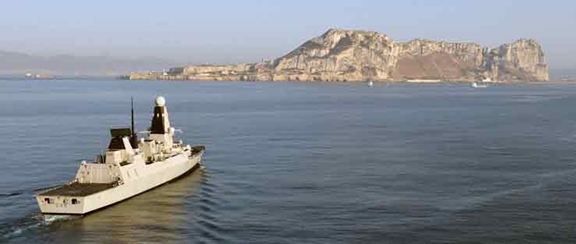
HMS Diamond exercises with her French counterpart*

he Type 45 destroyer took part in a series of exercises with the FS Forbin, a French Horizon class destroyer which looks similar to the Royal Navy’s brand new fleet of ships. 

 
Originally conceived under the same project that envisaged a single design for the British, French and Italians Navies, the UK subsequently decided to pursue its own design, the Type 45, but there are still many similarities between the two.


HMS Diamond met up with the FS Forbin while on her way to the Middle East where she will be working to protect the seas, keeping them safe for international trade.


As specialist air defence platforms, both ships engaged in exercises that saw them defend themselves against attacking jets flown from the French aircraft carrier, FS Charles de Gaulle.


This scenario reflected what both HMS Diamond and FS Forbin are primarily designed to deal with if they were escorting a task group of warships, and it allowed them to engage with multiple aircraft and simulated missile runs.


Captain Marc Assedat, the Commanding Officer of the Forbin said:
"Speaking openly and sharing each other’s experiences strengthens our confidence.”
 
Having left her home port of Portsmouth on 13 June and already called in at Gibraltar, Diamond continues to the Middle East, where she will take on her operational duties from her sister ship, HMS Daring, protecting UK interests in the region.

* Notícia publicada al web de la Royal Navy. El nivell de les marines britàniques no és només una qüestió de tecnologia i tradició, ambdúes mantenen exercicis conjunts amb regularitat per fer front a tot tipus d'amenaces.

diumenge, 27 de maig del 2012

Piraterie : formation de gardes-côtes djiboutiens*

Le 16 mai 2012, l’équipage de la frégate de surveillance (FS) Nivôse, engagée dans l’opération Atalante depuis le 16 avril 2012, a formé une équipe de gardes-côtes djiboutiens lors de son escale à Djibouti.


Les marins du Nivôse ont exposé les procédures d’interception de skiffs suspects, la mise en place d’une équipe de protection embarquée (EPE), ainsi que la prise en charge de pirates présumés. La formation a été composée d’une partie théorique puis d’une mise en application des éléments enseignés.

Une partie de la journée a par ailleurs été consacrée à l’emploi du site internet sécurisé Mercuy. Ce site créé et géré par le MSCHOA (Centre de sécurité maritime pour la Corne de l’Afrique) permet à tous les acteurs militaires et civiles engagés dans la lutte contre la piraterie, ou en étant les victimes potentielles, d’échanger de l’information voire en signaler les attaques en cours.

Cette journée fait partie intégrante d’un programme général de coopération supervisé par l’état-major de la force européenne Atalante, embarqué à bord de la Marne. Le bénéfice de ce type de rencontre mutuel a pour objectif d’aider les marines et gardes-côtes des pays de la région à développer des capacités maritimes propres, tout en permettant aux bâtiments de la force européenne Atalante de profiter de leur expérience et de leur connaissance de la zone. Cela facilite par ailleurs les contacts ultérieurs lors d’éventuelles opérations où une collaboration pourrait être nécessaire.

Cette démarche s’inscrit dans l’approche globale de l’Union Européenne et de la France en particulier en matière de lutte contre la piraterie, qui vise à soutenir le gouvernement somalien et promouvoir la coopération avec les pays de la région.

Formation de gardes-côtes djiboutiens (2)


* Notícia publicada al web de la Marine Nationale. La formació de forces locals de guarda-costes és, en tots els aspectes, una bona notícia. Tot un exemple de com emprar correctament un enclavament a l'exterior, en aquest cas, Djibouti. 

diumenge, 25 de març del 2012

Liban : exercice Cèdre bleu*

Dans le cadre de la coopération bilatérale franco-libanaise et de la formation des officiers élèves du Groupe Jeanne d’Arc 2012, un exercice amphibie nommé Cèdre bleu s’est déroulé les 13 et 17 mars à Jounieh, au nord de Beyrouth. 


Organisé par les forces armées libanaises (FAL), Cèdre bleu a vu la mise en œuvre de moyens interarmées.
Les FAL ont participé avec un sous-groupement tactique interarmes (SGTIA) sur M113, deux engins de débarquement d’infanterie et de chars (EDIC), deux hélicoptères Gazelle et trois hélicoptères Bell UH1.
Les forces françaises ont été engagées a partir du bâtiment de projection et de commandement (BPC) Dixmude avec un SGTIA sur VAB, un engin de débarquement amphibie rapide (EDAR), deux chalands de transport de matériel (CTM) et deux hélicoptères Gazelle. Le 17 mars, les unités ont réalisé un entrainement conjoint au débarquement.

Dans un premier temps, les commandos marine libanais ont été mis en place par embarcations légères et par hélicoptères pour reconnaitre la plage. Ils ont été suivis par les troupes mises en place par l’EDAR, les EDIC et les CTM.

Tout au long de la manœuvre, le dispositif terrestre a été appuyé par les hélicoptères français et libanais.
Le chef d’état-major des armées, l’amiral Edouard Guillaud et son homologue libanais, le général  Jean Kahwagi ont assisté à l’exercice. Tous deux se sont félicités de la vigueur de la coopération bilatérale de défense entre la France et le Liban.

En effet, parallèlement à la participation française à la FINUL (force de l’ONU au Liban), la France contribue à la montée en puissance des FAL avec notamment des exercices réguliers lors du passage d’unités françaises dans la région et des échanges dans le domaine de la formation (170 militaires libanais accueillis en France chaque année).

* Notícia publicada al web oficial de la Marnine Nationale.

diumenge, 26 de febrer del 2012

Antilles : exercices amphibies avec le Dumont d’Urville

Le 30 janvier 2012, le bâtiment de transport léger (BATRAL) Dumont d’Urville a pris la mer vers la Guadeloupe, Saint-Martin, Saint-Barthélémy ainsi que les îles voisines pour une série d’exercices amphibies.
L’objectif était de valider un certain nombre de plages en vue de futurs exercices ou actions de coopération amphibies.
En à peine deux semaines, le Dumont D’Urville a reconnu six plages en coopération avec les autorités locales.
Un groupe du 33e Régiment d’Infanterie de Marine (RIMa) et leurs véhicules (P4 et TRM 2000) ont accompagnés les marins dans leur mission où l’équipage a enchainé les opérations de débarquement, les mouvements de chargements et de déchargements des véhicules à un rythme soutenu.
La France est un acteur régional important, notamment de la sécurité, du fait de la présence de ses forces armées de la zone. Des missions d'entraînement, d'instruction, des escales de bâtiments ainsi que des échanges sont régulièrement menés avec les pays de la région afin d'améliorer les capacités des Etats voisins.
La coopération régionale renforce la connaissance mutuelle et l'interopérabilité de nos forces. Elle permet en cas de crise ou de catastrophe naturelle de mettre en commun les moyens militaires nécessaire pour être réactif.
Sources : EMA
Droits : Ministère de la Défense et des anciens combattants

dimecres, 8 de febrer del 2012

L’EDAR teste son interopérabilité dans le radier du San Antonio*

Mise à jour : 07/02/2012 10:02
Le 4 février 2012, le nouvel engin de débarquement amphibie rapide (EDAR) a réalisé avec succès plusieurs essais de manœuvres sur le bâtiment amphibie américain USS San Antonio .
Dans un créneau de deux heures, l’EDAR a réalisé trois enradiages successifs dans le radier du San Antonio  dont deux en embarquant un véhicule de transport de l’US Marine Corps de près de 7 tonnes. Le chef d’équipage de l’EDAR explique que «a préoccupation portait sur l’éventuel manque de profondeur d’eau dans le radier». Le commandant du San Antonio  s’est dit «impressionné par la plateforme amovible de l’EDAR, qui mue l’engin en une sorte de catamaran une fois les véhicules chargés».
Les huit marins qui composent l’équipage de l’EDAR ont pu conduire cette manœuvre inédite avec les manœuvriers du San Antonio , eux-mêmes assistés de trois manœuvriers français montés à bord un peu plus tôt.
Ces essais font suite à l’accueil récent, dans le radier du BPC Mistral , des Landing Craft Air Cushimon (LCAC), bolides sur coussin d’air américains. Le BPC Mistral  avait procédé à la certification de ces engins en vue de leur éventuelle utilisation sur de prochaines missions. Le succès de ces divers essais bi-latéraux témoigne de la bonne interopérabilité des deux marines, malgré la différence des matériels, des procédures et des habitudes françaises et américaines.
L’EDAR peut charger jusqu’à 80 tonnes de matériels sur sa plateforme mobile et atteindre une vitesse d’une vingtaine de nœuds en pleine charge.
Sources : © Marine nationale

* Notícia publicada al web de la Marine Nationale. Els exercicis Bold Alligator 2012 estan demostrant la interoperabilitat entre la US Navy i la Marine Nationale.

dissabte, 4 de febrer del 2012

Bold Alligator 2012 : répétition générale avant le jour-J*

Le 24 janvier 2012, le bâtiment de projection et de commandement (BPC) Mistral , est arrivé au large de Norfolk, quinze jours après son départ de Toulon.
Avant d’accoster, trois jours d’entraînement dans la baie de Chesapeake ont permis au détachement amphibie français de répéter les procédures et les tactiques qui seront mises en œuvre lorsque les troupes françaises débarqueront sur une plage de Camp Lejeune.
Première étape : la certification du Landing Craft Air Cushion (LCAC), hydroglisseur de débarquement amphibie américain employé par l’US Navy, accueilli pour la première fois dans le radier du Mistral . « La certification consiste en une série d’essais  entre ces embarcations sur coussins d’air et notre BPC, qui a été conçu dès le départ pour pouvoir opérer avec ces engins », explique le capitaine de frégate François Mayor, commandant en second du BPC. Enradiages et déradiages successifs, à vide puis chargé de véhicules de l’armée de Terre, essais de ravitaillement, procédures d’urgence, autant de manœuvres répétées pendant plusieurs heures par les manœuvriers français et l’équipe de pilotage du LCAC, dans la perspective d’une interopérabilité totale des moyens français et américains.
Les deuxième et troisième jours ont été pleinement consacrés à la répétition du débarquement du groupement tactique. Près de 400 hommes et 90 véhicules sont passés du BPC à la terre, par une dizaine de vagues de chalands couplées à des rotations d’hélicoptères de transport.
Plusieurs objectifs : dérouler le plan de chargement des véhicules, d’abord, afin de s’assurer de la justesse de leur positionnement dans le hangar du BPC et de réajuster certains points tactiques de l’assaut.
Le but étant là d’utiliser autant que possible le potentiel du nouvel engin de débarquement amphibie rapide (EDAR), dont la marine a fait l’acquisition en décembre dernier et qui naviguait pour la première fois hors des eaux françaises hier. Toujours en phase de test de ses capacités opérationnelles, l’EDAR s’est fait une place aux côtés de deux chalands de transport de matériel (CTM) dans le radier du Mistra l, afin de poursuivre ses essais au cœur d’un environnement pleinement opérationnel. Véhicules de l’avant blindé, chars AMX 10 RC, petits véhicules protégées et camions de transport, se sont succédés sans difficulté notable sur sa plateforme.
Le 26 janvier, une fois l’ensemble des moyens de l’armée de Terre réembarqués à bord du BPC, le détachement français a accosté quelques nautiques plus à l’ouest, au cœur de l’immense base navale de Norfolk.
Après la répétition des troupes, place cette fois à la répétition de l’état-major, qui, avec ses homologues américains, va travailler pendant deux jours le concept de l’opération, sur maquettes et cartes géantes. Puis ce sera la dernière ligne droite avant le « D-day », le 6 février prochain.
Sources : EMA
Droits : Ministère de la Défense et des anciens combattants 
 
* Notícia publicada al lloc web de la Marine Nationale. D'especial importància per complementar l'anterior,

dimecres, 25 de gener del 2012

Nouvelle Mission pour le Vendémiaire: "Entre Tigres et Dragons"*

Mise à jour : 23/01/2012 15:37  - Auteur :  CR1 Mikael Quemeneur et Aspirant Nicolas Legrand 
 

Deux mois à peine après son retour d’Australie et de Nouvelle-Zélande, la frégate de surveillance Vendémiaire,  basée à Nouméa, repart en mission pour un déploiement de quatre mois en Asie.
Le 23 janvier 2012, le Vendémiaire  a quitté Nouméa pour une longue mission en extrême orient et en Asie du sud-est. Le bâtiment patrouillera dans les eaux archipélagiques des îles voisines de la Nouvelle-Calédonie : les îles Salomon, Palau puis les Philippines, avant de mettre le cap plus au nord, avec notamment une escale au Japon. La frégate se rendra ensuite en Corée du Sud et en Chine et poursuivra son déploiement le long des côtes d’Asie du Sud-Est : Vietnam, Cambodge, Malaisie, Thaïlande, passant ainsi des « Tigres asiatiques [1] » (les nouveaux pays exportateurs) aux « quatre Dragons [2] » (les nouveaux pays industrialisés d’Asie). Enfin, le chemin du retour sera l’occasion d’un arrêt au Timor Leste et en Papouasie-Nouvelle-Guinée.

Ces missions dans le Pacifique et en Asie ont pour but d’afficher l’importance pour la France de cette zone qui a des intérêts économiques et politiques mais aussi des alliances et amitiés historiques. Cet attachement se concrétisera par des collaborations militaires avec les armées des nations amies. Le bâtiment effectuera également la surveillance des pêches en haute mer dans certaines zones sensibles dans le cadre de la Western and Central Pacific Fisheries Commission (WCPFC) et de la Pacific islands Forum Fishery Agency (FFA). Plus largement, le Vendémiaire  apportera un soutien à nos autorités diplomatiques et consulaires.
Le bâtiment retrouvera le lagon calédonien à la fin du mois de mai après plus de 115 jours de déploiement.
[1] Les Tigres asiatiques sont les États qui sont dits « nouveaux pays exportateurs » (NPE) : la Thaïlande, la Malaisie, l’Indonésie, les Philippines et le Vietnam.
[2] Les Quatre Dragons sont les nouveaux pays industrialisés d’Asie : la Corée du Sud, Taïwan, Singapour et Hong Kong.

Sources : Marine nationale
Droits : @ Marine nationale

Notícia publicada a la web de la Marine Nationale. Creiem convenient compartir-la per recordar que l'armada francesa segueix tenint un paper a escala mundial.

divendres, 25 de novembre del 2011

La DGA livre le premier catamaran de débarquement*


La direction générale de l’armement (DGA) a réceptionné le 24 novembre 2011 à Toulon le premier engin de débarquement amphibie rapide (EDA-R), qui quintuple la capacité de débarquement offerte par rapport aux chalands en service. Les EDA-R seront utilisés sur les bâtiments de projection et de commandement (BPC) de la marine.

Notifié en juin 2009 dans le cadre du plan de relance de l’économie, le marché comprend l’acquisition de quatre EDA-R en tranche ferme et leur maintien en condition opérationnelle jusqu’à mi-2015. Les trois autres engins seront livrés d’ici mi-2012. Basé sur un concept unique au monde (L-CAT - Landing Catamaran ) breveté par la société CNIM (Constructions industrielles de la Méditerranée), l’EDA-R est un catamaran rapide en mode transit, qui se transforme en navire à fond plat pour plager et enradier, grâce à une plate-forme élévatrice centrale. Chaque BPC peut emporter deux EDA-R dans son radier.

Conçus pour effectuer le débarquement de troupes et de véhicules militaires à partir d’un bâtiment amphibie positionné au-delà de l'horizon (30 nautiques/55 km), les EDA-R pourront être utilisés pour des opérations humanitaires dans des zones dépourvues d’infrastructures portuaires. Long de 30 mètres et large de 12, l’EDA-R a une capacité d'emport de 80 tonnes et une vitesse de 18 nœuds à pleine charge et de 30 nœuds à vide. Ses portes à l’avant et à l’arrière simplifient les opérations de chargement et de déchargement des véhicules. Au total la capacité du flux logistique est 5 fois supérieure à celle offerte par les chalands en service.

Le chantier naval Socarenam, sous-traitant du maître d’œuvre CNIM, fabrique la coque sur son site de Saint-Malo et finalise le navire à Boulogne-sur-Mer. La charge de travail générée par la réalisation des quatre engins est d’environ 400 000 heures et représente plus d’une centaine d’emplois directs pendant 3 ans. Au coté de CNIM et de Socarenam, de nombreuses entreprises et PME françaises sont impliquées dans la réalisation des EDA-R.

* Nota de premsa publicada al web de la Marine Nationale.

dimecres, 9 de novembre del 2011

CNIM - Landing Craft and Multipurpose Patrol Craft*


French-based company CNIM is involved in a wide range of activities within the defence industry. For the naval sector, CNIM has designed a new concept of landing craft for LCU, LCT and LST.

L-CAT landing catamaran

The L-CAT landing catamaran is an innovative amphibious fast shore-connecting concept developed by CNIM in reply to 'over the horizon' logistic and force projecting requirements of modern LPD / LHD vessels.

The L-CAT consists of a full length mobile platform operated by hydraulic jacks, which is suspended between the two hulls. During landing operations the platform lowers into the sea thereby lifting the vessel out of the water reducing its draft to approximately 0.8m allowing the vessel to navigate in shallow water and come to shore and beach. During high-speed navigation the platform is lifted in its highest position, improving the vessels sea-going capacities and allowing it to be deployed up to 200 miles from shore.
The L-CAT is designed to fit within the minimised space provided by dock ships, and provides full Ro-Ro capacities and open sea door-to-door logistics.

The French Ministry of Defence acquired four vessels and the first of series is scheduled to be delivered in 2011. The L-CAT can operate on any sea with or without a harbour. Her versatility makes her suitable for all kinds of disaster relief operations.

MPC multipurpose patrol craft

The MPC is a vessel dedicated to multi-role coast guard duties. It combines a number of innovative features allowing it to deploy fast intervention RHIBs (rigid hull inflatable boat), vehicles or trucks, oil recovery installations, ROVs and numerous other equipment on a large mobile platform installed between the two hulls. It has an effective payload capacity of 60t. 

The movable platform can be lowered into the water, thereby reducing the vessels draft, allowing it to navigate in shallow waters and approach the shore and beach. Its foldable bow ramp gives it the capability to load vehicles to and from beaches and quays, giving the vessel an effective Ro-Ro functionality. 

The capacity to deploy RHIBs in severe weather conditions is of major importance. Instead of performing RHIB operations from the side or over the transom, the MPC lowers and inclines its platform to create a sheltered sea area in between two hulls, as well as a protected and artificial landing area onto the inclined platform. Doing so, the operators can work under safe conditions, while the RHIBs navigate away from the vessels stern wake turmoil during launching and recovery manoeuvring. The ship provides accommodation for a complement of 12 crew and 16 special trained personnel, which allows for missions in excess of ten days and 1500 nautical miles. 

These combined features allow the MPC to be used for coastal patrol services, logistic support, humanitarian rescue, military operations, oil spill cleaning and combined asymmetric threat assessment.

MPC2 multi-role offshore patrol vessel

By using a unique patented lifting platform, the MPC2 combines shallow water landing and shore-connecting operations with the deployment of high-speed interceptors, helicopters, UAVs or observation ROVs. 

The movable platform can be lowered into the water, thereby reducing the vessels draft, allowing it to navigate in shallow waters and approach the shore and beach. RHIB launching and recovering operations are performed by lowering and inclining the ships platform to create a sheltered sea area in between two hulls, as well as a protected artificial landing area onto the inclined platform. Doing so, the operators can work under safe conditions, while the RHIBs and interceptors can navigate away from the vessels stern wake turmoil. 

The ship provides an effective platform payload of 200t and accommodation for a complement of 25 crew and 50 special trained personnel, which allows for missions in excess of 3000 nautical miles.
With economic speed ranges the MPC has a cost-effective interest within a number of multi-role deployment scenarios: 
  • Law enforcement and illegal traffic control
  • Deployment of high-speed interceptor and RHIB’s
  • Military force projections and high-speed shore connections
  • Logistic support for both military and humanitarian operations
  • Helicopter and UAV operations
*Notícia publicada a naval-technology.com

dimecres, 26 d’octubre del 2011

MISÈ A DOSPOSITION ET PRISE DE COMMANDEMENT DE L'ADROIT*


Vendredi 21 octobre 2011 à 11h30, au cours d’une cérémonie à Lorient, DCNS a mis officiellement à disposition de la Marine nationale, le patrouilleur hauturier L’Adroit.
Le vice-amiral d’escadre Xavier Magne, commandant de la Force d’Action Navale, représentant le chef d’Etat-major de la Marine, a ensuite présidé la première cérémonie des couleurs. Il a ensuite fait reconnaître le capitaine de frégate Loïc Guyot comme commandant du navire.


Prévue par une convention signée en octobre 2010 lors du salon Euronaval, la mise à disposition de cet outil industriel est un partenariat «gagnant-gagnant»:
- La Marine met en œuvre ce navire, acquiert l’expérience opérationnelle à la mer sur ce type de bâtiment et développe une capacité d’expérimentation de différents systèmes (optronique, communications, drones, etc.).
- DCNS, qui a développé ce bâtiment sur ses fonds propres et qui en reste propriétaire bénéfice du retour d’expérience d’une marine de haut rang ainsi que du label «sea proven» pour ce navire à l’exportation.
Ce bâtiment, né d’une proposition de DCNS, est mis à disposition de la Marine pour 3 ans et sera employé dans le cadre régulier de ses missions de sauvegarde maritime (secours en mer, lutte contre l’immigration clandestine, police des pêches, lutte contre les pollutions, lutte contre le narcotrafic, surveillance maritime).


Les grandes dates du bâtiment :
  • 7 mai 2010 : découpe de la première tôle
  • 18 mai 2011 : mise à l’eau (équipage civil avec quelques marins en appui)
  • 27 juillet 2011 : premiers essais à la mer
  • 5 sept 2011 : constitution d’un équipage Marine
  • 21 oct 2011 : prise en charge par la Marine et mise en condition initiale (MECI)
  • Fin oct : Début de la vérification des caractéristiques militaires (VCM)
Caractéristiques
  • Déplacement : 1 500 tonnes
  • Taille : 87 m x 11,7 m
  • Autonomie : 8 000 Nq
  • Vitesse : 21 nœudsCapacités : abri hélicoptère pour HLO 5 tonnes (Dauphin / Panther)
  • Équipage : 32 personnes (avec capacité d’accueil de 27 passagers). Dès avril 2012, le bâtiment fonctionnera avec 2 équipages (relève tous les 4 mois).
  • Armement : 1 canon de 20 mm, 2 mitrailleuses de 12.7mm, canons à eau.


 * Notícia publicada al lloc web oficial de la Marine Nationale. L'Adroit pertany a la sèrie de corbetes i patrulleres Gowind, fabricades per DCNS, que s'adapten a un ampli espectre de missions, tant convencionals com asimètriques, així com operacions militars diferents a la guerra.